 Fasti
Fasti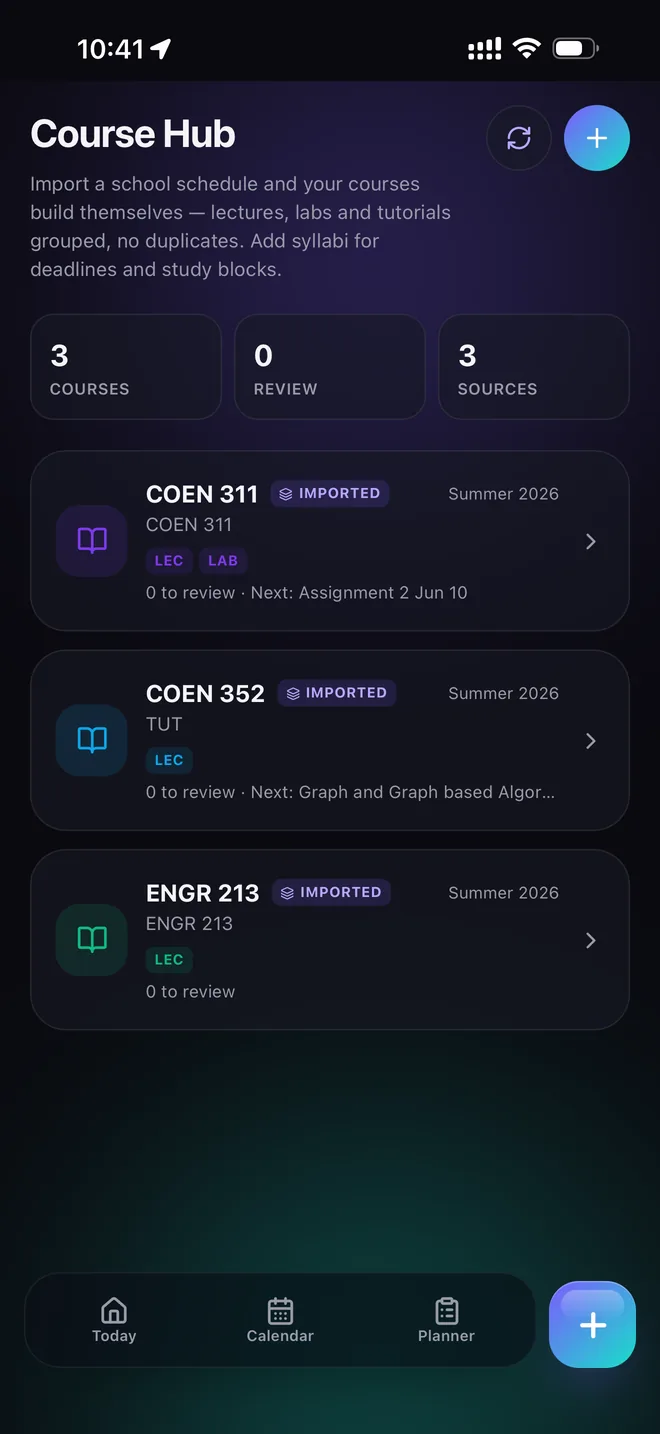
1. Get your class schedule into one place
Before anything else, your timetable needs to exist somewhere other than a registration portal you'll forget to check. Import your class schedule from a screenshot, PDF or pasted list so lectures, labs and tutorials are on your calendar with the right days, times and rooms — including rotating weeks or A/B patterns if your program uses them.
2. Read every syllabus in the first week
This is the single most valuable thirty minutes of the semester. Go through each course outline and pull out every exam, assignment, project and quiz date, then add them to your calendar immediately. The syllabus-to-calendar tool can do the extraction for you from a PDF or photo, but the habit matters more than the tool: a deadline you know about in September is manageable, one you discover in November is a crisis.
3. Check your work shifts against your class times
If you have a job, confirm your availability against your actual timetable before shifts get scheduled around it — not after. A student schedule planner that shows both together makes it obvious when a shift request would conflict with a lecture or lab, instead of finding out the week it happens.
4. Set a basic budget for the semester
Once your class time and paid hours are both visible, you can plan money realistically: how many hours you can actually work, what a paycheck looks like against rent and food, and where a student budget planner can flag a shortfall before it becomes a missed payment.
6. Finish with a week-zero check
Before classes begin, scan the next two weeks rather than stopping when the data is entered. Check that every recurring class has the right day and time, each early deadline has a reminder, your first work shifts leave travel time, and your budget reflects the hours you can actually work. This short semester planning check catches setup errors while they are still easy to fix.
- Confirm the first class meeting and any orientation dates.
- Mark exams, assignments and project milestones from every syllabus.
- Leave visible space for sleep, meals, travel and unexpected work.
Common questions
What should I do before the first week of classes?
Import your class timetable, read every syllabus and add graded deadlines to your calendar, confirm your work shifts don't conflict with classes, and set up a basic budget for the semester. Doing this in week zero prevents the most common early-semester scramble.
What's the most overlooked item on a back-to-school checklist?
Reading every syllabus for dates in the first week, not the week each assignment is due. Most students only find out about a conflicting exam or project deadline when it's already close, because the information sat unread in a PDF since day one.
Should I plan my budget before or after classes start?
Before, if possible. Once you know your class times and confirmed work shifts, you can see how many paid hours actually fit around them and plan rent, food and savings against real numbers instead of guesses.
How do I coordinate schedules with roommates or a study group?
Share only the specific events that affect them — like a shared class or a rent due date — rather than your whole calendar. That keeps coordination useful without exposing your entire schedule.