 Fasti
Fasti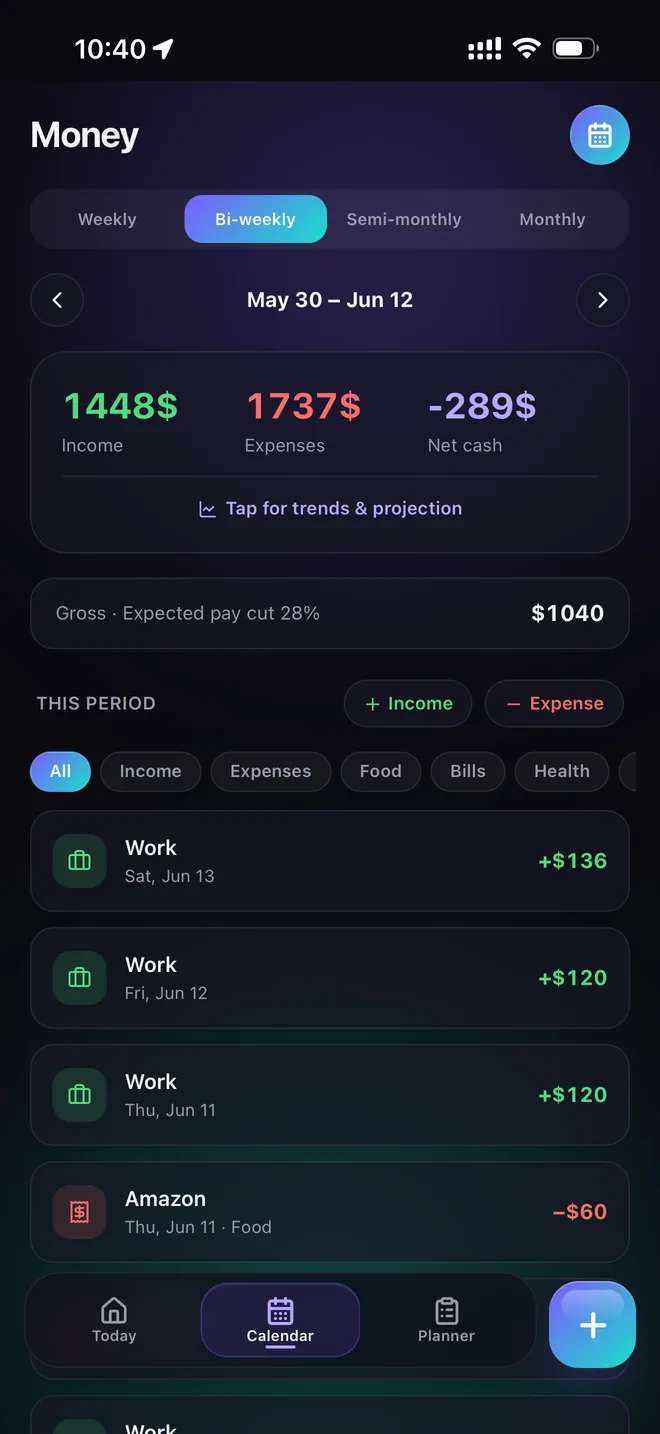
Start with dependable shift and pay details
Add each work profile with its pay rate and usual schedule. Confirm whether income estimates should use gross or take-home amounts, and choose the pay cycle that matches the employer. An accurate period matters more than a generic monthly average when bills are due on specific dates.
Keep one-off income separate from repeating shifts. That makes the forecast easier to understand and avoids treating a temporary payment as normal monthly income.
Place expenses in the same timeline
Record recurring costs such as rent, transit, phone and subscriptions, then add variable expenses as they occur. A budget becomes more useful when it can answer “what remains before the next pay date?” instead of showing only an annual category total.
- Use the actual due date for fixed bills.
- Separate needs, flexible spending and savings goals.
- Review expected pay when a shift is cancelled or moved.
- Avoid counting transfers between your own accounts as new income.
Evaluate the time cost of another shift
Extra income may also remove study time, add travel and create a tight transition before class. Because Fasti keeps the study plan and work schedule together, you can check whether the shift creates an overlap or leaves preparation too late.
The useful question is not only “How much will I earn?” It is “What else must move, and is that tradeoff acceptable this week?”
Review the forecast after real changes
Update cancelled shifts, overtime, unusual deductions and one-off expenses rather than letting the plan drift away from reality. Use goals as direction, not as money already available. Fasti provides planning support, not financial advice, so confirm payroll, tax and banking information with the relevant source.